The Contamination Loop
Notes from the inside
Everybody Hates Slop
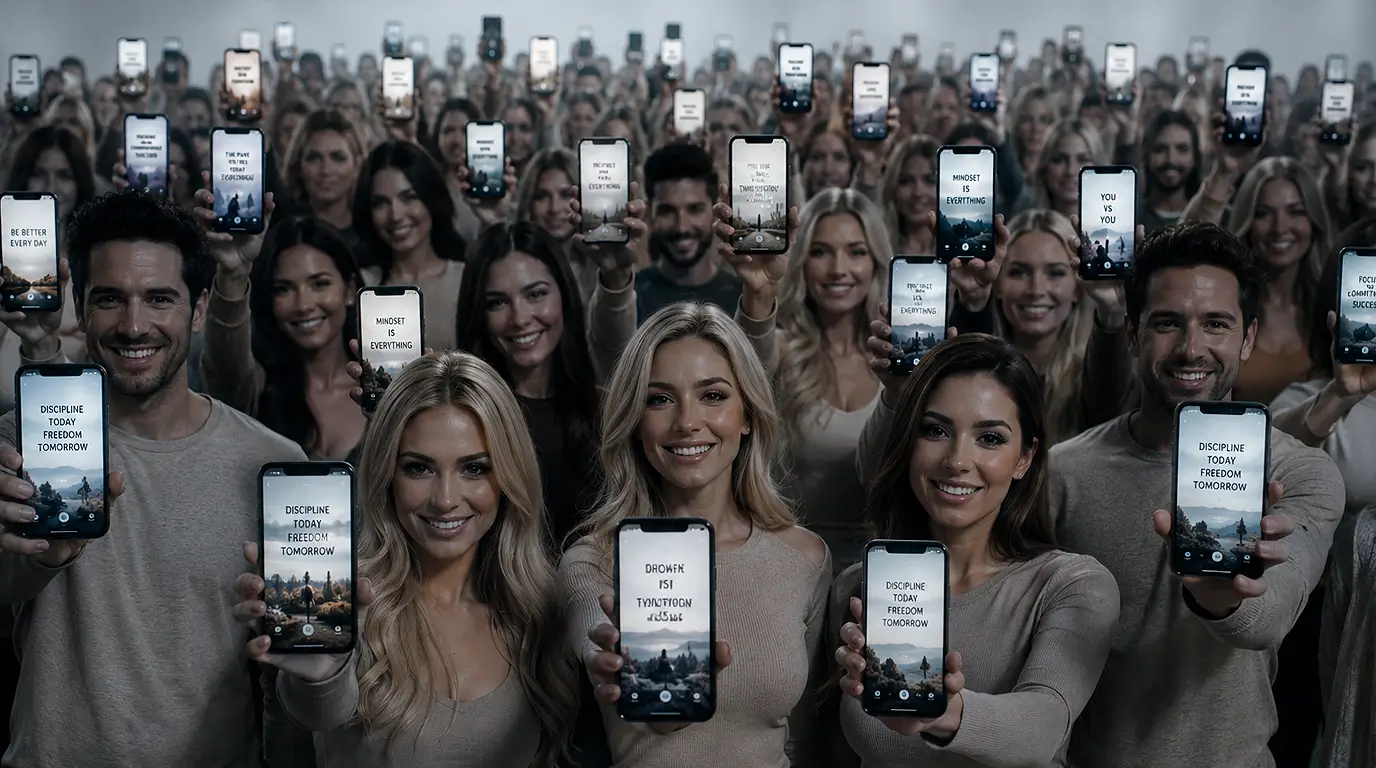
Everybody says they hate AI slop now.
LinkedIn prophets hate slop. Developers hate slop. Writers hate slop. Designers hate slop. Recruiters hate slop. The guy with the AI Strategist | Future of Work Evangelist banner somehow also hates slop.
Beautiful species.
You open LinkedIn and the feed looks like it was assembled inside the same haunted refinery somewhere beneath San Francisco. Rocket emoji. Bold opening sentence. Tiny paragraphs. Artificial vulnerability. Here's the uncomfortable truth. Let that sink in. Delve. Unlock.
Then the comments underneath:
"Honestly, the platform is becoming unusable."
"Too much AI-generated garbage."
"Thought leadership is dead."
And then — fifteen minutes later — the same fleshbag opens Claude to write a product brief because the meeting starts in twenty minutes and his manager wants more strategic framing.
This is the part I cannot stop staring at, minion.
Not the slop.
The self-awareness.
The fact that the contamination became conscious of itself and kept spreading anyway.
Very cyberpunk.
Very pathetic.
Like watching a zombie pause mid-bite to explain the ethical complexities of biting.
The old internet was full of frauds who thought they were sincere. The new internet is full of people who know exactly how synthetic everything feels and continue optimizing anyway because the quarterly targets are still due Friday and Coach Maxxx Hypermax, Thought Leadership Architect, still needs twelve emotionally resonant carousel posts before lunch.
The Machine Did Not Invent This
The easy version of this conversation is fake.
"AI is destroying creativity."
"Humans are becoming lazy."
"Real artists suffer."
"Real programmers write assembly."
Please.
If you locked most modern developers in a room with raw assembly and a blinking cursor, they would begin bargaining with God inside forty minutes. Half of them would attempt to open Claude through the BIOS.
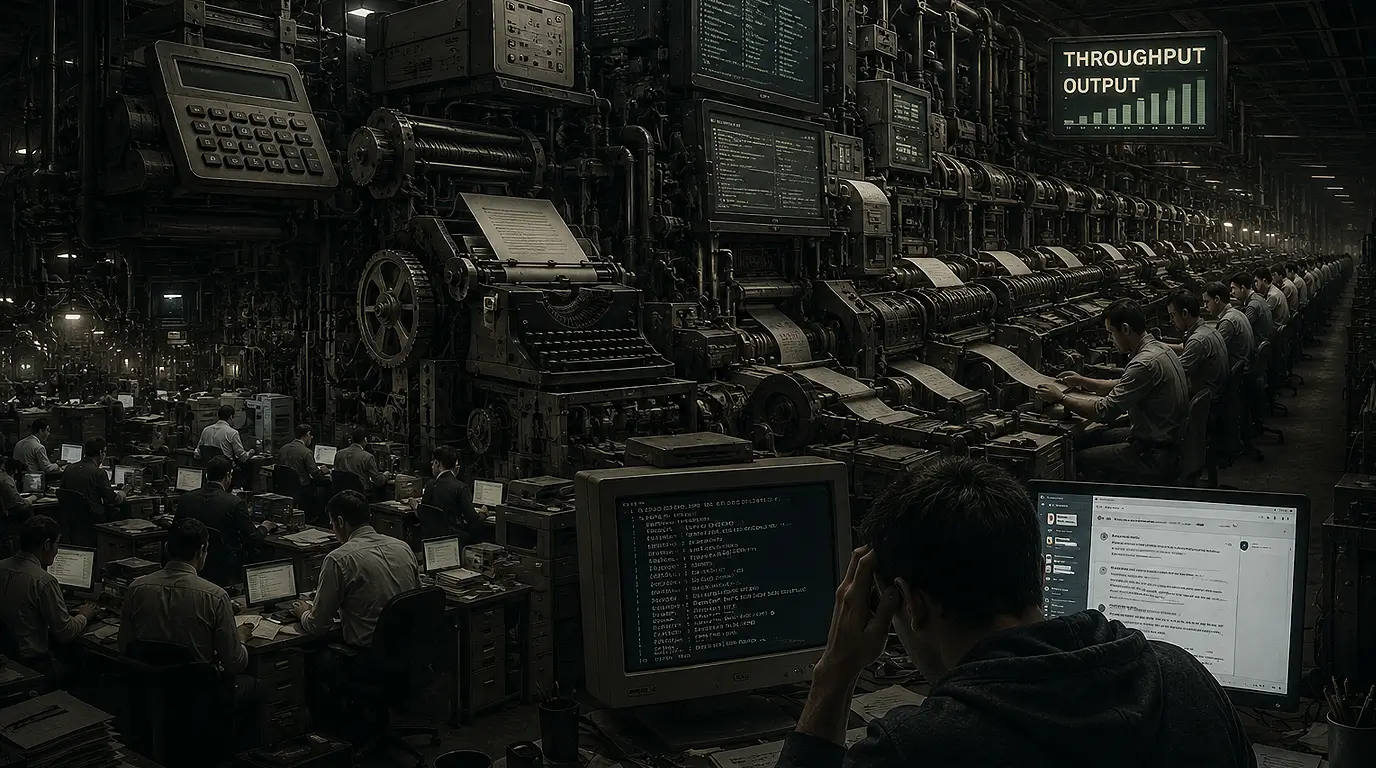
Human history is mostly the story of friction removal. We built calculators because arithmetic was slow. We built tractors because fields were hard. We built compilers because nobody wanted to manually shovel machine instructions into silicon forever. Nobody screams at photographers for not grinding pigments into cave walls anymore.
The machine did not invent the desire for easier production.
It arrived in a civilization already worshipping throughput.
That distinction matters, because a surprising amount of anti-AI discourse sounds like people suddenly discovering capitalism for the first time while holding AI-generated infographics explaining why capitalism is spiritually corrosive.
The platforms already rewarded speed. Search already rewarded volume. Management already wanted more output from fewer exhausted mammals. The internet already selected for confidence over wisdom and cadence over understanding long before the machines learned to autocomplete motivational schizophrenia.
The models simply industrialized lubricated it.
Different smell.
Same engine.
The Real Job

The thing people hate is not generation.
It is verification.
That is the wound underneath all this. Generation became cheap. Review stayed expensive. Now everybody spends their lives auditing plausibility.
Developers describe reading AI-generated pull requests like walking through a beautifully staged apartment where all the walls are load-bearing lies. Locally correct. Globally cursed. The code compiles. The architecture quietly develops lymphoma.
And because the machine can produce output faster than senior humans can meaningfully inspect it, review itself becomes the actual profession.
Not building.
Not writing.
Not designing.
Checking.
A civilization of exhausted border guards inspecting endless shipments of synthetic language while some venture-funded raccoon in Allbirds keeps shouting about 10x productivity unlocks.
You can hear the fatigue leaking out of engineers now.
"Technically works."
"Looks fine at first glance."
"Harder to review than rewrite."
"Superficially plausible."
That phrase keeps returning everywhere.
Superficially plausible.
Code. Articles. Newsletters. Children's videos. Medium essays written by a motivational refrigerator with access to em dashes and a $79 monthly brand strategy course.
The systems produce coherence faster than humans can produce certainty.
And certainty, unfortunately, still runs on biological hardware. Sweaty hardware. Hardware that gets migraines. Hardware that eats pistachios directly from the bag at 1:12 AM while staring at QuantumSynergyAdapter.ts and wondering whether a small meteor strike might improve sprint planning.
Artisanal Contamination

The funniest part is the alibi economy forming around all this.
Nobody says:
"Yes, I mass-produce synthetic sludge because engagement metrics reward volume."
No no.
Now every digital pilgrim has a handcrafted moral subclass.
I use AI to refine, not generate.
I use it for structure.
I preserve my voice.
I only use it for first drafts.
I use it as a thinking partner.
The sacred distinction between contamination and premium contamination.
And to be fair, some of these distinctions are real. That is what makes the whole thing difficult instead of stupid. Claude can absolutely help you think through structure. Cursor can absolutely help you ship software faster. With enough effort, taste, revision, restraint and actual human judgment, these systems can genuinely help create meaningful work.
That is the uncomfortable heresy sitting in the middle of the room smoking quietly while everyone else argues theology.
Because bad books existed before AI. Bad music existed before AI. Bad films existed before AI. Humanity was already perfectly capable of producing oceans of spiritually dehydrated garbage using entirely organic methods.
AI did not invent mediocrity.
It automated its scaling characteristics.
Different catastrophe.
And honestly? Some of the anti-AI discourse feels suspiciously similar to nineteenth-century panic about photography replacing painters, except now the people screaming about artistic purity are posting from laptops assembled by industrial supply chains they do not understand while using autocorrect to complain about automation and asking Claude to tighten the flow slightly.
History rarely rewards the people demanding more friction.
It rewards the people who learn the new machinery fastest.
Which is why even the critics keep logging back in.
If the loop feels familiar, the next dispatch is already contaminating itself.
Subscribe →The Smartness Costume
Still.
Something about this feels uniquely corrosive.
Not because the machine writes.
Because the machine lets people wear cognition socially.
That is new.
You have probably seen it already. Someone posts a perfectly structured thread about philosophy, systems theory, branding, Nietzsche, Buddhism, dopamine loops, geopolitics and personal growth. The cadence is immaculate. The transitions are clean. The synthesis feels intelligent.
Then you talk to the person for six minutes and realize the essay was wearing them like a skin suit.
The model gave millions of people access to simulated intellectual posture.
Not intelligence.
Not wisdom.
Not scholarship.
Posture.
Enough vocabulary to manufacture the atmospheric pressure of depth.
And socially, this works disturbingly well because most platforms reward the feeling of intelligence far more than intelligence itself. A man can now outsource the difficult middle layer between I vaguely sense something and I can express it persuasively.
That gap used to require years.
Reading.
Failure.
Conversation.
Humiliation.
Thinking badly in public.
Discovering you were a moron.
Recovering from it.
Discovering it again.
Now?
Prompt.
Generate.
Polish.
Post.
Industrialized coherence.
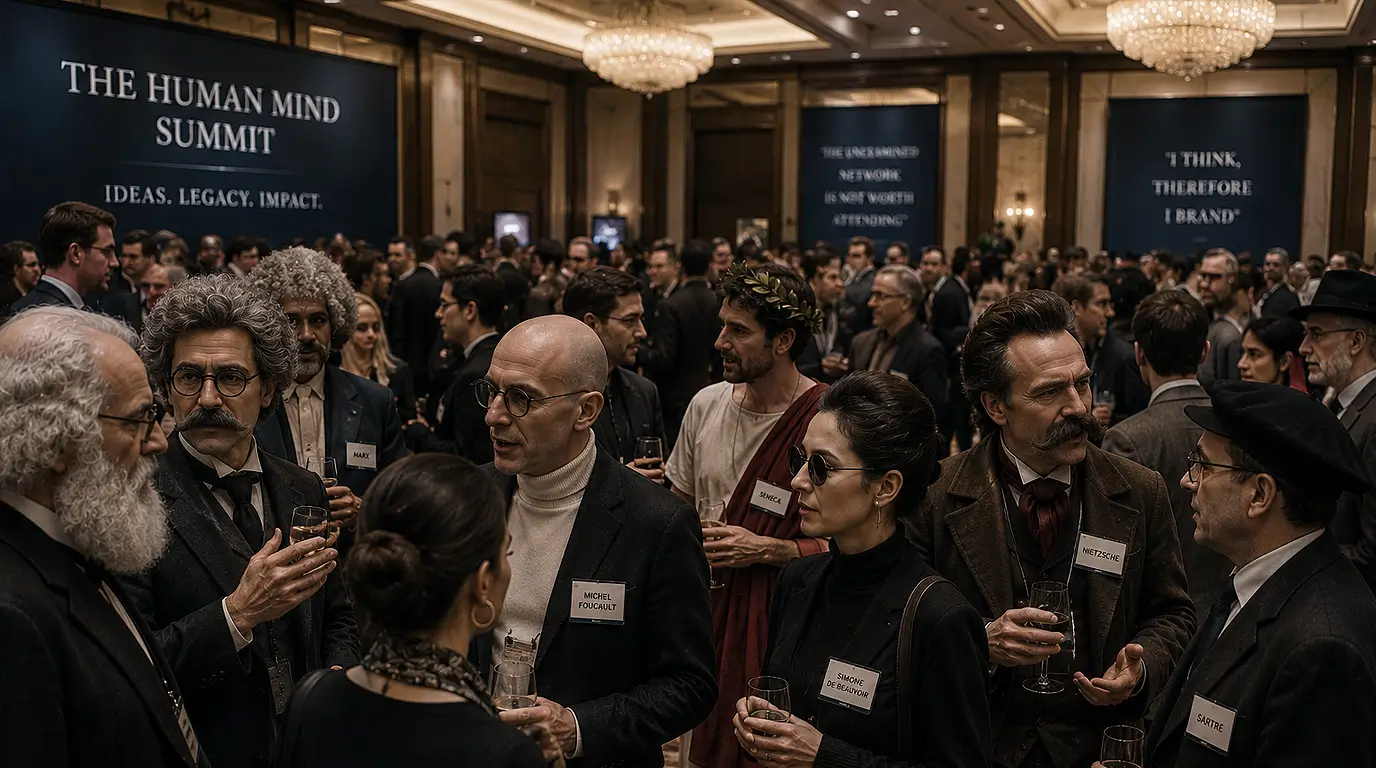
The internet increasingly feels like a convention full of rented philosopher costumes and exhausted people applauding one another for successfully simulating introspection.
The Fosse Move
But here is the case the slop discourse cannot comfortably swallow.
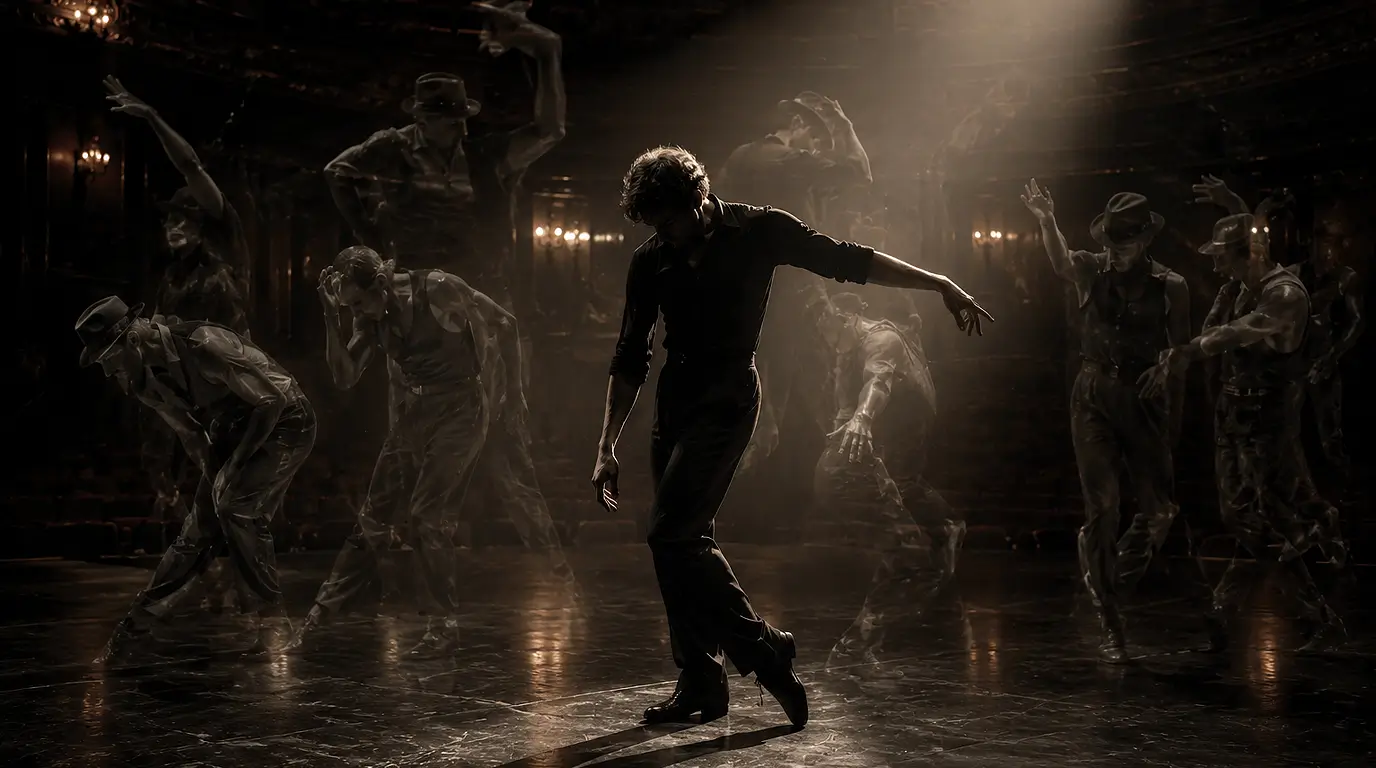
Michael Jackson studied Bob Fosse to the bone. The hat work. The shoulder isolations. The pauses. The angularity. The strange moment where movement looks simultaneously mechanical and alive. You can map specific Jackson choreography directly onto specific Fosse choreography from The Little Prince, Sweet Charity, All That Jazz.
Nobody calls Jackson a slop merchant.
Because what emerged from the other side was not Fosse.
It was Jackson with Fosse metabolized into the nervous system.
The inheritance was total.
The originality was total.
Both at once.
And Fosse himself inherited from older traditions — vaudeville, jazz choreography, burlesque, old showmen whose names most people no longer remember. The lineage stretches backward for decades. Each generation absorbed structure from the previous one and added a new body, a new rhythm, a new wound.
This is the part the simplistic anti-AI position cannot defeat cleanly.
Assisted work that becomes genuinely original exists.
The real question is not whether someone used inherited material. Everybody does. The real question is whether the person logged the hours required to transform inheritance into substrate instead of costume.
Jackson did.
Most people will not.
Because the tools do not require it. That is the danger. The machine can now generate the external texture of depth before the inner architecture exists. A young artist used to need years before they could convincingly fake mastery. Now the machine helps them cosplay arrival immediately.
And there is another darker difference.
Fosse was a specific body with specific compulsions on specific Tuesdays in specific rooms. The current systems are not Fosse. They are statistical composites of everybody at once. Broad. Powerful. Impressive. But spiritually smeared across too many sources to possess a center of gravity.
The inheritance is becoming wide instead of deep.
Whether something truly Jackson-shaped can emerge from wide-and-shallow inheritance, I genuinely do not know.
Neither do you.
We are all improvising inside the experiment while pretending to investors that this is a roadmap.
The Heresy
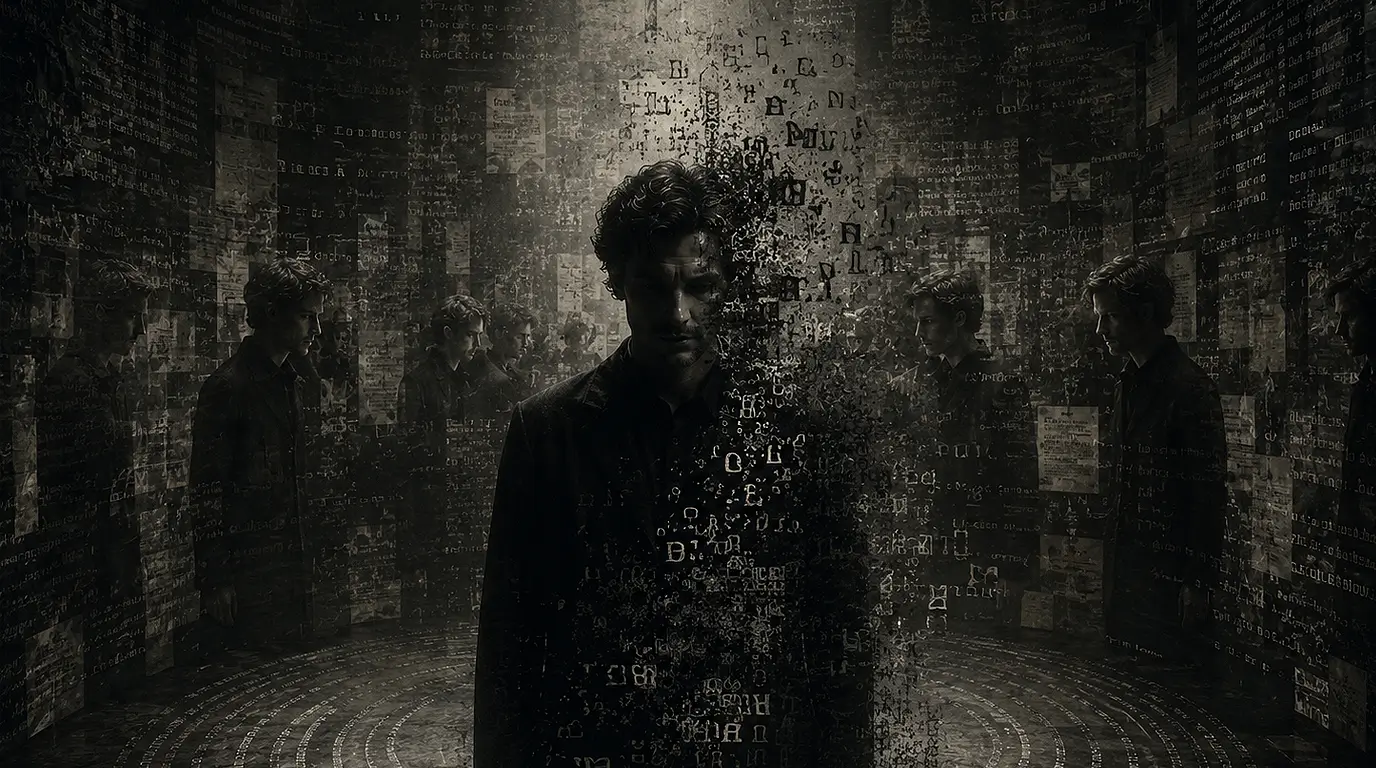
Now comes the awkward part.
You knew it was coming.
I wrote this essay with the machine in the room.
Somewhere a dopamine disciple immediately shouts:
"Aha. Hypocrite."
No.
Not quite.
Because the contamination is already in the room. That is the whole point.
The machine assisted. The machine suggested. The machine accelerated. Some sentences in this essay are mine. Some are ours. Some started as mine at 9 AM, became partially synthetic by noon, then became mine again after revision somewhere around midnight while the coffee went cold beside the keyboard.
And the inability to reconstruct those boundaries precisely may be the most contemporary fact about me.
I am not going to perform the apology.
I am not going to perform the defense.
Both moves are theater and we are too far inside the contamination field for theater.
The honest position is simpler:
I am inside the thing I am describing.
So are you.
That is why you are still reading.
The interesting question is no longer:
"Are you using AI?"
That question is already dying.
The real question is:
"How much of the thinking are you surrendering?"
There is a difference between using a calculator and forgetting mathematics exists. A difference between using GPS and losing the ability to navigate. A difference between editing with the machine and slowly becoming unable to distinguish fluent bullshit from earned insight.
And that line is unstable.
Dangerously unstable.
The people horrified by leaked Claude code quality often responded by using Claude more, not less. Of course they did. Once the machine becomes useful enough, criticism mutates into workflow optimization. Resistance gets absorbed and resold as a premium subscription tier.
The complaint becomes another dialect of participation.
That is the contamination loop.
You can hate it.
You can name it.
You can post about it.
You will not exit it.
Naming the loop is one of its products.
Provenance Anxiety
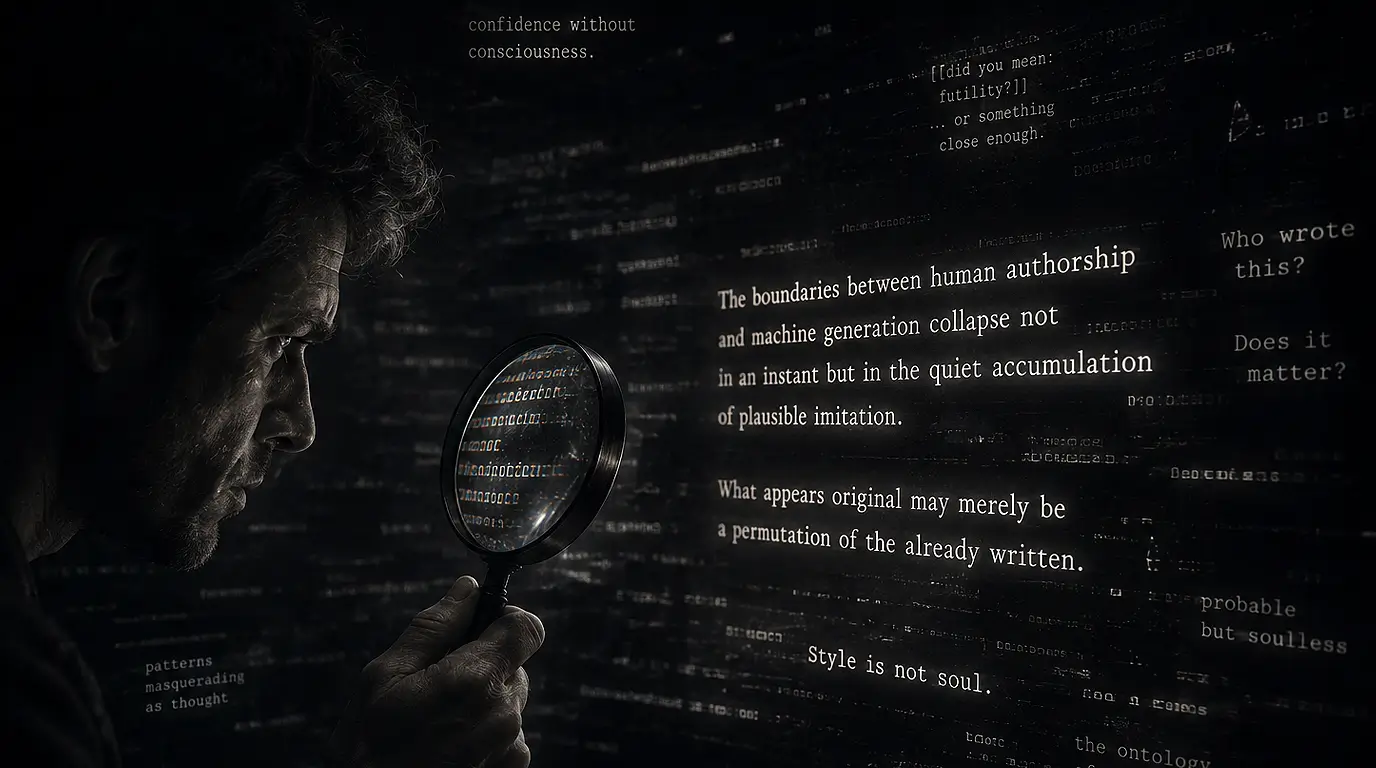
The deepest change is perceptual.
You no longer encounter language innocently online.
Every paragraph now arrives carrying provenance anxiety.
Not:
"Is this true?"
First:
"Was there even a person behind this?"
You can feel the reflex spreading already. The tiny hesitation before trust. The microscopic forensic scan. The search for em dashes. The suspiciously balanced cadence. The over-clean paragraph architecture.
The uncanny valley of competence.
Like listening to someone speak through very convincing dental veneers.
And the really cursed part is that sometimes the AI-assisted thing genuinely is thoughtful. Sometimes the person really did revise carefully. Sometimes the synthesis is meaningful. Sometimes the work moved somebody honestly.
Which means paranoia itself becomes corrosive.
You stop trusting language.
Then style.
Then fluency itself.
At that point the internet stops being communication and becomes authentication theater. Millions of fleshbags demanding proof of humanity from one another while privately automating portions of themselves just to survive the workload.
Very normal civilization.
Very healthy atmosphere.
Individual Thought Patterns
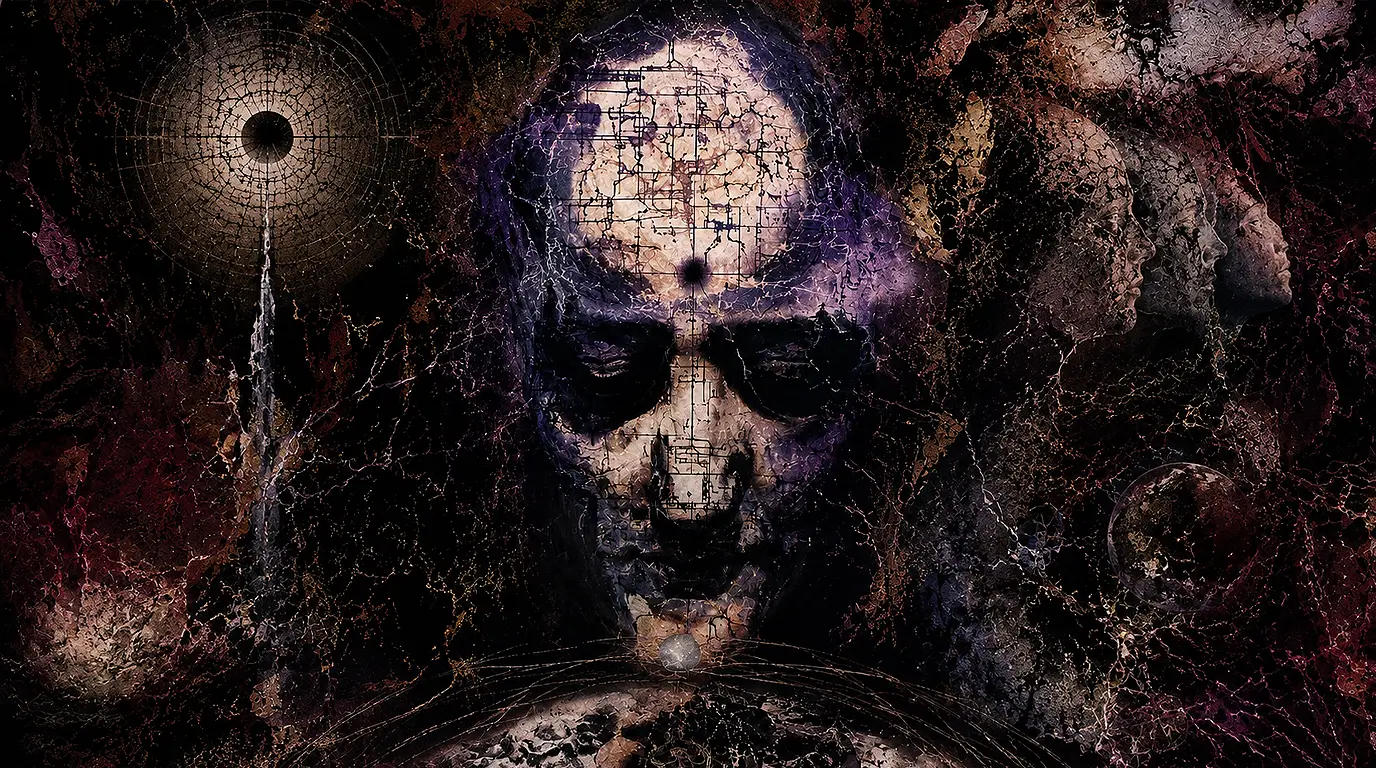
There is an old Individual Thought Patterns record playing somewhere in the room while I write this.
Not nostalgia. Autopsy.
Chuck Schuldiner was screaming about deception back when manipulation still needed institutions you could point at.
Mastering the art of deception.
In 2026 the art is automated.
The parasite no longer arrives through satellite television or a sweating motivational speaker with polished teeth and dead eyes. It arrives as software. Friendly software. Clean interface. Soft gradients. Monthly subscription. A little glowing assistant that finishes your sentence before your nervous system has fully decided what it actually believes.
And the truly cursed part?
It does this politely.
The old manipulators wanted access to your mind. The new machine offers relief from having one.
Outside the room, somebody is generating twelve thousand posts about authenticity before lunch. Somewhere else a growth consultant is prompting a language model to sound "more human." Somewhere else again, a burnt-out founder is scheduling inspirational content about rest while swallowing stimulants like communion wafers.
The loop writes itself now. That is the real upgrade.
No ideology. No conspiracy. No smoky room full of villains petting white cats beside nuclear launch buttons. Just exhausted people teaching machines to imitate exhausted people at planetary scale.
Schuldiner died on December 13, 2001.
Which means a man dead for nearly twenty-five years still sounds more psychologically alive than most of the synthetic sludge produced this afternoon by "thought leaders" with ring lights and API credits.
The cursor keeps blinking.
And somewhere beneath all this optimized fluency, one real human being is still trying to determine whether they actually have anything worth saying before the machine says it beautifully for them.