The Ghost in the Scroll
How AI-Written Texts Spark Mass Paranoia, Detection Witch Hunts and One Very Human Crisis
Let me guess, minion.
You've just read a strangely coherent LinkedIn post titled "How I Used a Single Morning Routine to Land a $300K Job in Web3" and now you're asking yourself a 21st-century question:
"Was this written by a person or by a particularly smug toaster?"
Congratulations.
You've entered the simulation singularity. A brave new era where your RSS feed, Medium homepage, Substack newsletter and even grandma's book club email might've been ghostwritten by a circuit board.
And now everyone from teachers to tech bros to terrified editors is racing to figure out what's real, what's robotic and what's just really bad writing.
This, dear reader, is not a drill. This is the literary version of Invasion of the Body Snatchers.
Only this time, the bodies are blog posts. The snatchers? LLMs. And the scream? It's your inner critic realizing that even your most heartfelt essay could be mistaken for syntactic soup brewed in a data center.
So buckle up.
We're diving headfirst into the uncanny valley of AI-authored content, the detection-industrial complex it spawned and why the line between human and machine has never been blurrier... or more hilarious.
Carl and the Case of the Artificial Epiphany
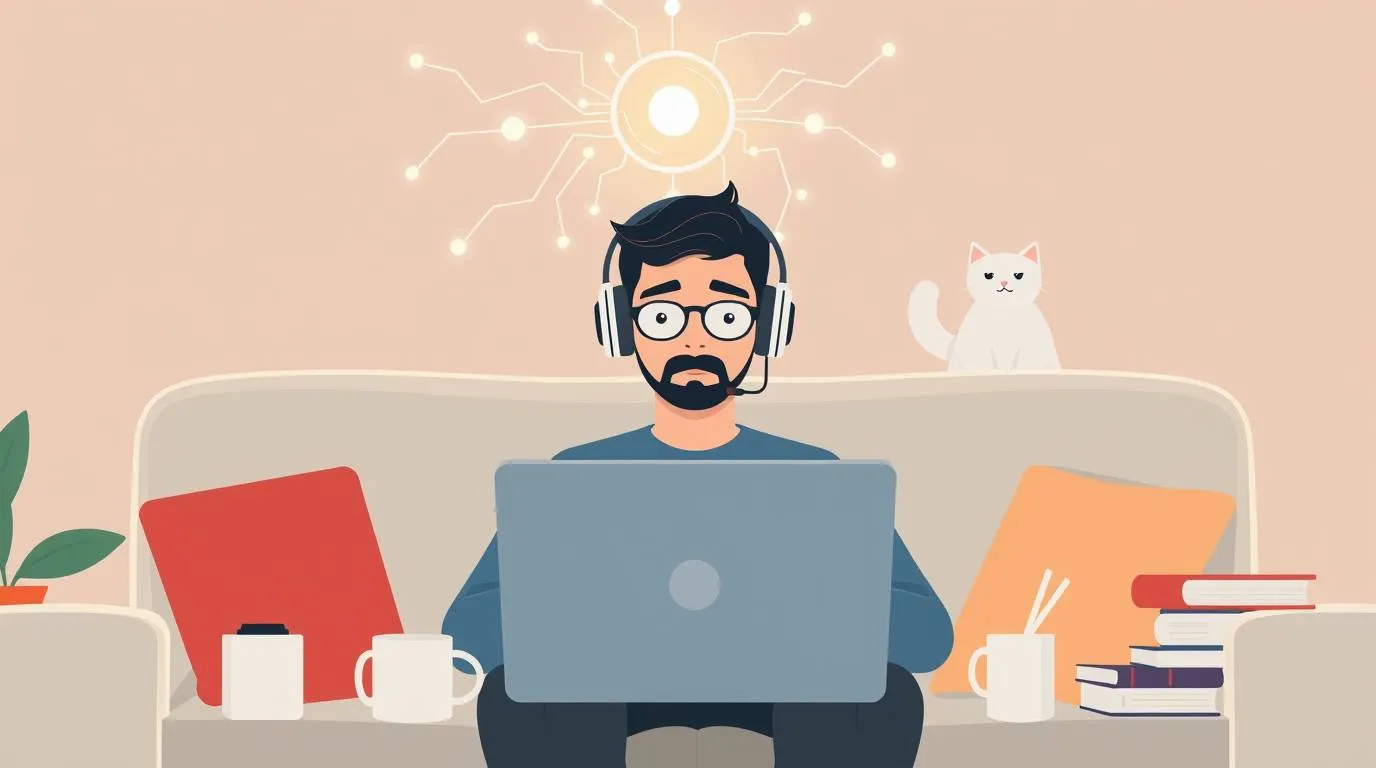
Meet Carl.
Carl writes motivational newsletters about how waking up at 5:55am changed his life.
He swears by bulletproof coffee, productivity apps and long-form Medium essays that begin with "This one habit made me unstoppable."
Except Carl hasn't written an actual sentence since November 2023.
His ghostwriter? An AI named EchoMuse.
Carl now spends his mornings feeding vague prompts like "how to build discipline with monk mindset" into his silicon oracle, lightly editing the output to add a curse word or two for "authenticity" and hitting publish.
His followers? Still clapping.
His revenue? Up 42%.
His conscience? Archived in iCloud.
Carl doesn't care who writes his insights as long as the engagement graph looks like a Bitcoin chart from 2021.
He's not writing anymore. He's just syncing with the machine like a reluctant pilot inside an Evangelion unit, letting the silicon beast do the heavy lifting while he stares out the window and waits for the likes to roll in.
But Carl has a problem.
So does everyone else.
Because now... everyone's suspicious.
The Rise of the Literary Witch Trials
AI writing detectors are the new digital divining rods.
Teachers wave them over student essays.
Editors wave them over pitch emails.
HR departments wave them over resumes like they're trying to detect black magic.
And the results?
Chaos, mostly.
Some poor grad student in Budapest writes a simple essay on climate policy and GPTZero accuses him of algorithmic sorcery.
Meanwhile, an actual AI-written manifesto titled "Manifest Joy Through Neurofinancial Abundance" passes undetected because it includes two emojis and a spelling mistake.
Accuracy? Optional.
False positives? Frequent.
Racism? Inevitable.
You see, most detection tools flag "basic English" as "robotic". That means international students and ESL writers get nailed while GPT casually writes Nietzsche fan fiction and slips through the net like a digital Casanova.
One student in Ohio got accused of plagiarism because her essay didn't include enough filler words...
Another guy was told:
"This feels too organized to be real."
Heaven forbid someone thinks before they write.
We've created a system where writing too well is suspicious and writing too badly... is also suspicious.
It is like we've turned creativity into a TSA checkpoint.
If authorship now feels like a crime scene, the machine already touched everything.
Subscribe →Medkit for the Literarily Insecure
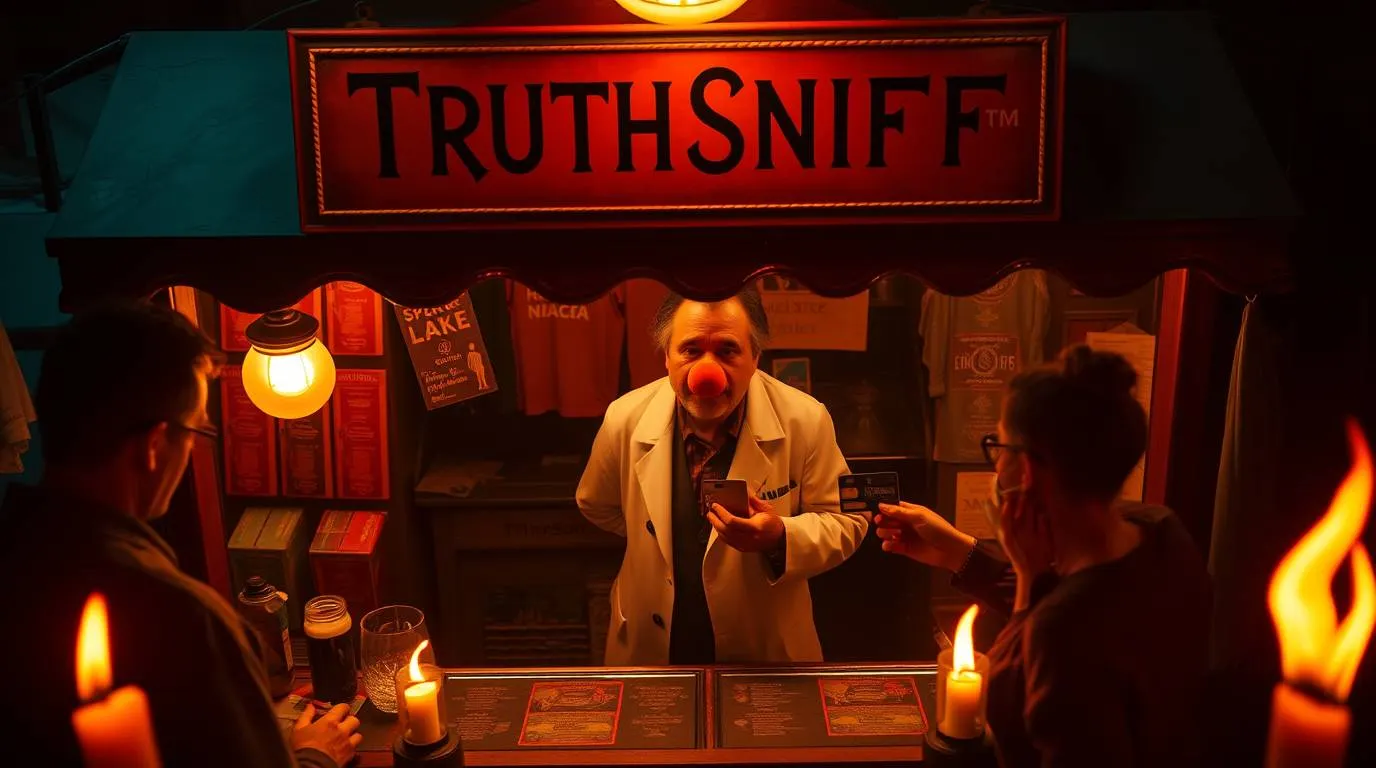
Allow me to introduce the villains of our little spectacle:
- TruthSniff™: Promises to detect "AI tone" using something called a Linguistic Authenticity Index, which sounds like a rejected concept from Black Mirror.
- ZeroGPT: Sounds decisive. Isn't. Has accused Shakespearean sonnets of being "53% AI-generated."
- GPTFingerprinter™: Claims to scan writing for digital DNA. Still can't tell if that tweet was written by a bro, a bot or a bro using a bot.
- TurnItIn AI: The academic watchdog that labeled an entire philosophy class "algorithmic cheaters" for excessive use of long dashes.
These tools aren't truth machines.
They're spectacle software.
They don't know what's real.
They just know what seems artificial to an overtrained pattern recognizer built by someone who failed their creative writing course.
But hey, why chase nuance when you can sell subscriptions?
The Good, The Bad and the Deeply Uncanny

Let's pause and acknowledge something mildly horrifying:
Sometimes AI writing isn't just passable... It's better than what we'd get from actual people.
Oh yes. I've seen the receipts.
I've read job cover letters written by humans that made me question evolution. I've read AI-written ones that made me consider hiring the machine.
I've seen AI compose heartfelt birthday messages, romantic poems, even philosophical essays on Kierkegaard that didn't make me want to eat a USB cable.
And yet, something is always off.
There's a weird neutrality. A shine without soul. Like a mannequin wearing a leather jacket.
It looks good until it blinks.
AI writes for everyone and no one.
It can imitate a style, but it doesn't mean it.
There's no memory behind the metaphor. No emotional residue.
It's like reading the dream journal of someone who's never been alive...
Welcome to the Simulacra Scramble

Philosophical detour incoming. Buckle up, fleshbags.
Frankfurt warned us about bullshit. Speech designed to persuade without caring about truth.
Debord said the spectacle wasn't about real life, but representations of life sold back to us.
Baudrillard spoke of simulacra. Copies of things that never existed.
Now apply that to AI writing.
You're not reading a real thought.
You are reading an imitation of what sounds like thought.
And the detectors? They're just more simulacra. Tools trying to detect mimicry with mimicry.
We've created a literary Matrix, only there's no red pill.
Just Grammarly suggestions and the vague hope that the sentence you are reading came from someone who once felt something.
Spoiler: It probably didn't.
Dr. Evil's AI Authorship Panic Kit™
In these confusing times, I offer you the following unlicensed toolkit for surviving the great authorship apocalypse:
- PromptJammer™: Randomly inserts human errors into your writing. Misspellings, unfinished thoughts and out-of-place confessions about your ex. Instant authenticity guarantee.
- GhostBusterPro™: Every time someone asks: "Did you use AI to write this?", it triggers a Socratic dialogue about what authorship even means anymore.
- TruthFlare™: Flashes red whenever a platform rewards engagement over accuracy. May trigger seizures if used on Medium.
- CommentScrambler™: Transforms all AI vs Human debates into ASCII versions of Diogenes flipping a barrel.
- RealTalk.exe: A single sentence that flashes across your screen every hour: "Write what matters, not what ranks".
Closing Argument from the Abyss
Let's not kid ourselves.
You, dear reader, have probably read AI-generated content today. Maybe even this week. Maybe even this morning, before your first sip of overpriced mushroom coffee. And... you might be reading it at this very moment.
And do you really care?
Because in the end, the question is not:
"Is this written by a human?"
The question is:
"Does it move you?"
If it does not, then who cares what wrote it?
If it did, then maybe the ghost in the machine is less important than the fire in the message.
Will Smith once asked a robot if it could write a symphony or paint a masterpiece.
That was 2004.
The better question today might be:
Can you still tell the difference?
So stop sniffing paragraphs like a conspiracy theorist at a typewriter.
Stop trying to separate the man from the machine with glorified literary pH tests.
The authorship wars are a distraction.
The real battle? Creating something that doesn't suck.
Whether by calloused hands or caffeinated circuits.
Whether typed by a monk in a mountain temple or a teenager in a hoodie screaming "ChatGPT made me famous".
Let them worry about detection.
The rest is between you and the page.